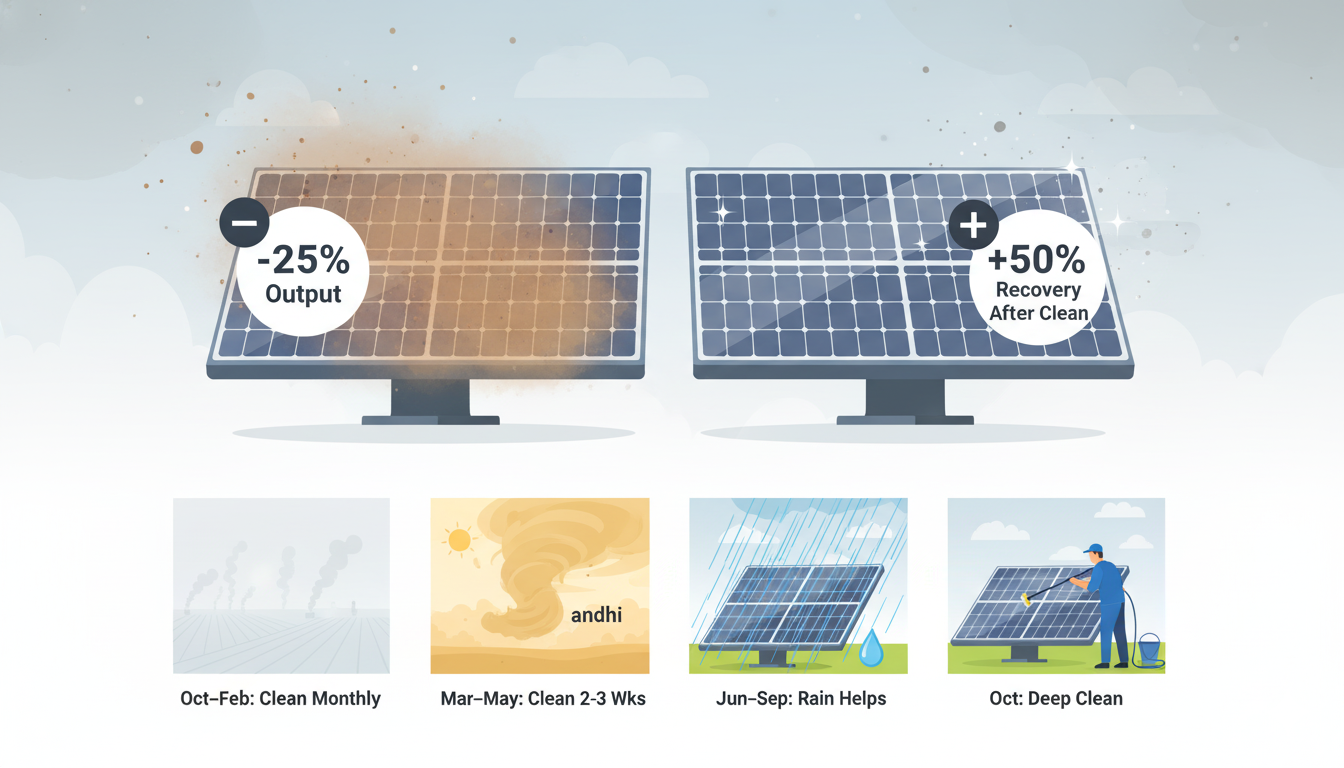
North India's chronic dust and pollution problem is not just a public health crisis—it is a direct, measurable threat to rooftop solar performance. Research shows that solar panels in the Indo-Gangetic Plain, which includes UP cities like Noida, Lucknow, Kanpur, and Agra, lose 17–25 percent of annual generation due to a combination of airborne particulate matter and deposited dust, with some installations reporting losses as high as 30–50 percent during peak pollution seasons.
The Science Behind Output Loss
Solar panels generate electricity when photons from sunlight strike the silicon cells. Any material sitting on the glass surface or suspended in the air between the sun and the panel reduces the photon count reaching the cells, directly cutting output. Researchers from Duke University and IIT Gandhinagar found that soiling from dust and anthropogenic particulate matter (PM) contributes roughly equally to energy losses in northern India—unlike eastern China where man-made pollution dominates.
The composition of grime on Indian solar panels reveals the full picture: approximately 92 percent is mineral dust, while the remaining fraction consists of carbonaceous pollutants from vehicle emissions, biomass burning, industrial chimneys, and coal combustion—a signature of the dense, mixed pollution across UP and Delhi-NCR. Winter months (December–February) see the worst combined impact, when low sun angles, agricultural stubble burning, fog, and reduced wind speed trap PM near the surface, hitting both airborne and deposited soiling simultaneously.
How Much Output Is Actually Lost in North India?
Studies quantify the losses precisely for India's northern region. Joint field research across UP cities like Kanpur and Agra found carbonaceous aerosol concentrations of 23–33 µg/m³ on average, contributing to significant light scattering before photons even reach panels. Panels left uncleaned for just one month in these conditions showed a 50 percent jump in efficiency upon cleaning, underscoring how rapidly soiling accumulates.
An IIT Delhi study published in 2022 further warns that weak air pollution controls could reduce India's solar-rich days by up to 15–20 per year in northern regions, directly shrinking the annual energy window for rooftop solar generation. Rising temperatures compound this—every 1°C above standard test conditions (25°C) reduces panel efficiency by 0.3–0.5 percent, meaning a 45°C UP summer afternoon already costs 6–10 percent efficiency before accounting for soiling.
Seasonal Patterns UP Homeowners Must Know
Understanding when losses are highest helps homeowners plan cleaning and monitoring schedules strategically:
- Winter (Oct–Feb): Worst pollution season in North India—stubble burning, temperature inversions, and fog trap PM10/PM2.5, reducing both irradiance and panel surface cleanliness. Clean panels at least monthly.
- Summer (Mar–May): Peak dust storms (andhi) and construction dust cause rapid surface soiling. High temperatures compound losses. Clean every 2–3 weeks in exposed locations.
- Monsoon (Jun–Sep): Rain provides natural washing, reducing cleaning frequency. However, mud splashes, algae, and bird droppings post-monsoon need attention immediately after the season ends.
- Post-monsoon (Oct): Residual dust mixes with early pollution. A thorough professional cleaning before winter is critical to start the high-demand season at full efficiency.
How to Fix It: Practical Solutions for UP Homeowners
Regular Cleaning
The single most effective remedy is frequent cleaning. Doubling the cleaning interval from monthly to bi-monthly can increase average annual losses from 17 percent to 24 percent in northern India's pollution environment, making cleaning frequency one of the highest-ROI maintenance decisions you can make. Use soft microfibre cloths or a gentle brush with clean, demineralised water during early morning or evening hours (never midday when panels are hot) to avoid thermal shock and streaking.
Anti-Soiling Coatings
Hydrophobic and anti-reflective nano-coatings applied to panel glass reduce dust adhesion and allow rain to carry away more particulate matter between cleanings. These coatings are now available from several Indian manufacturers and can reduce soiling losses by 3–7 percent annually, improving ROI on cleaning investments.
Automated Cleaning Systems
For larger commercial or premium residential systems in high-pollution zones, automated dry-brush or electrostatic cleaning systems clean panels daily or on schedule without water, eliminating the labour and water costs of manual cleaning and ensuring no generation loss builds between visits.
Tilt Angle Optimization
Panels installed at 26–30° tilt (ideal for North India) benefit from gravity-assisted dust clearance—rain and wind remove particulate matter more effectively than flat-mounted panels. Ensuring adequate tilt is a passive, zero-cost soiling mitigation strategy.
Performance Monitoring
Installing inverter-linked monitoring apps or energy meters allows daily generation tracking. A sudden unexplained output drop—beyond weather variation—is often the first detectable sign of heavy soiling or bird droppings on a section of panels, prompting immediate cleaning before losses compound.
Addressing Ambient PM: A Collective Responsibility
Field research is clear that cleaning panels alone is not sufficient in highly polluted regions—ambient PM scatters sunlight before it reaches panels, and no amount of surface cleaning can fix that. Transitioning to electric vehicles, supporting clean cooking, and advocating for stricter industrial emission controls in UP contribute to lower ambient pollution that benefits every solar installation in the region alongside individual maintenance efforts.
FAQs
Q1. How much output do solar panels lose due to pollution in North India?
A1. Research shows 17–25 percent annual generation loss on average, rising to 30–50 percent in peak pollution seasons without regular cleaning.
Q2. How often should I clean solar panels in Noida and other UP cities?
A2. Monthly cleaning in winter and every 2–3 weeks in summer is recommended; monsoon rain reduces frequency naturally but post-monsoon cleaning is essential.
Q3. What is the most important fix for dust-related output loss?
A3. Frequent, regular cleaning is the highest-impact fix; studies show a 50 percent efficiency improvement after cleaning panels left dirty for several weeks.
Q4. Do anti-soiling coatings help in North India's pollution?
A4. Yes, hydrophobic coatings reduce dust adhesion and can cut soiling-related losses by 3–7 percent annually, complementing regular manual cleaning.
Q5. Does air pollution affect solar output even if panels are clean?
A5. Yes, airborne PM scatters sunlight before it reaches panels; cleaning only addresses deposited dust, not ambient pollution losses.

