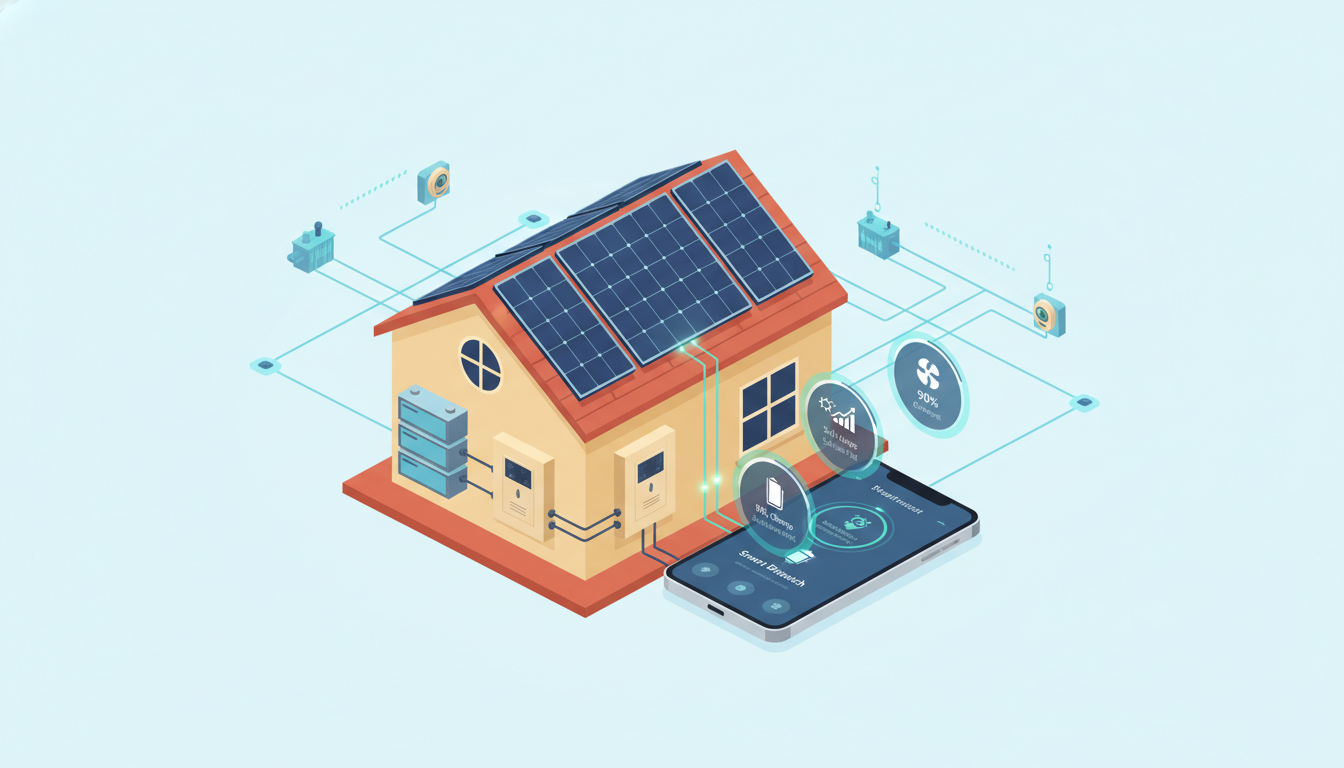
Solar panels have always been the hardware headline. But in 2026, the real transformation in rooftop solar is happening in software — and AI is at the centre of it. From real-time load management in homes to India's national push for a digital solar grid, artificial intelligence is turning passive energy generators into intelligent, self-optimising systems.
The Problem With Timers and Fixed Schedules
For years, the standard advice for solar homeowners was simple: run heavy appliances at midday when panels are generating peak power. Timers handled the scheduling. But this approach is breaking down in 2026 for three reasons: solar output is no longer predictable hour to hour due to weather variability, electricity tariffs now shift dynamically across peak and off-peak windows, and lower feed-in tariffs mean exporting surplus power is worth far less than using it yourself.
A fixed timer set for noon cannot account for a dust storm at 11:30 AM, a monsoon cloud at 1 PM, or a sudden spike in household demand. AI energy management systems solve this by responding to what is actually happening, not what was scheduled to happen.
How AI Solar Management Actually Works
AI-based solar energy management systems combine machine learning algorithms, real-time IoT sensor data, and weather forecasting to make continuous, automatic decisions about energy generation, consumption, storage, and export. The core capabilities operating in 2026 systems include:
- Predictive generation forecasting: AI analyses local weather data, historical panel performance, and seasonal irradiance patterns to predict how much solar will be generated in the next 15 minutes, 4 hours, or 24 hours — helping pre-charge batteries or schedule loads accordingly.
- Dynamic load management: High-consumption appliances like ACs, geysers, and EV chargers are automatically scheduled or throttled based on live solar availability, avoiding accidental grid imports during cloud cover.
- Fault detection and predictive maintenance: AI monitors individual panel and inverter performance streams, detecting micro-drops in output that indicate soiling, shading, or cell-level faults before they compound into significant losses.
- Smart battery dispatch: In hybrid systems, AI determines the optimal battery charge and discharge cycle across the day — storing during peak generation, dispatching during peak tariff windows, and preserving reserve for night or grid failure scenarios.
- Inverter behaviour optimisation: Smart inverters controlled by AI adjust reactive power, voltage regulation, and grid interaction in real time rather than operating at fixed parameters.
India's National Push: The ISA AI-for-Energy Mission
India is not just a passive beneficiary of this global shift — it is actively shaping it. On February 17, 2026, the International Solar Alliance (ISA) launched a formal Global AI-for-Energy Mission at the India AI Impact Summit in New Delhi, co-organised with the Ministry of Power and the Ministry of Electronics and IT.
The mission targets five priorities across ISA's 120+ member countries: deploying AI for distributed renewable energy, driving startup innovation, establishing interoperable data standards, ensuring citizen-level benefits, and structuring sustainable financing. A key technical solution under development is an AI-based Digital Twin platform that maps every meter, transformer, and rooftop solar asset onto a live digital grid model — giving DISCOMs real-time visibility into transformer loads, solar inflows, and future installation capacity.
For Indian rooftop solar owners, this directly matters: smarter DISCOMs mean faster net metering approvals, better grid stability, and eventually dynamic tariff structures that reward homes for exporting at optimal times.
What This Means for Indian Homeowners Right Now
For most residential solar owners in Noida, Lucknow, or Agra, full AI energy management is still an emerging adoption rather than standard practice. But entry points exist today:
- Smart inverter monitoring apps from brands like Growatt, Solis, and Luminous already provide real-time generation data, fault alerts, and basic consumption analytics on mobile — this is the foundation layer of AI solar management.
- AI-powered performance monitoring platforms flag abnormal output drops automatically, prompting cleaning or maintenance before losses accumulate over weeks.
- Hybrid inverter systems with AI dispatch — available from Deye, Sofar, and Huawei in India — optimise battery charge-discharge cycles based on weather forecasts and time-of-use tariff windows.
- For commercial installations of 10 kW and above, dedicated energy management systems with machine learning are now available and offer ROI through reduced demand charges, improved self-consumption ratios, and predictive maintenance scheduling.
The Bigger Picture: AI Could Add 13 EJ of Global Energy Savings
The scale of impact is significant at a global level. Research cited at the ISA AI Impact Summit estimates that AI applied to energy systems could save over 13 EJ of energy by 2035 and reduce grid operational costs by 15–20%.A TCS AI platform has already demonstrated 15–20% lower operational costs in an off-grid pilot project in Uttar Pradesh, while startups like Pravah are developing AI-native decision support engines that digitise the grid, forecast demand, and simulate power flows to localise losses.
The challenge running in parallel is that AI data centres themselves are projected to consume up to 3% of global electricity by 2030 — a demand surge that ironically reinforces the urgency of deploying more solar and smarter grids to power the AI infrastructure driving solar's own optimisation.
FAQs
Q1. Do I need a special inverter to use AI solar management?
Most modern hybrid inverters support AI-driven monitoring via app connectivity; dedicated AI energy management platforms work as an add-on layer above your existing system.
Q2. Can AI solar management help reduce electricity bills in India?
Yes — by maximising self-consumption, avoiding accidental grid imports, and optimising battery dispatch, AI systems typically improve effective solar utilisation by 10–20%.
Q3. What is the ISA AI-for-Energy Mission and how does it affect Indian solar buyers?
Launched in February 2026, it is a global initiative to integrate AI into solar grids across 120+ countries, which will eventually deliver smarter DISCOMs, faster approvals, and dynamic tariffs in India.
Q4. Is AI-based predictive maintenance available for rooftop solar in India?
Yes — inverter monitoring apps from major brands already detect performance anomalies automatically and alert owners before faults cause prolonged generation loss.
Q5. Will AI replace the need for manual solar panel cleaning?
No — AI detects when cleaning is needed by flagging output drops, but the physical cleaning still requires human intervention.

