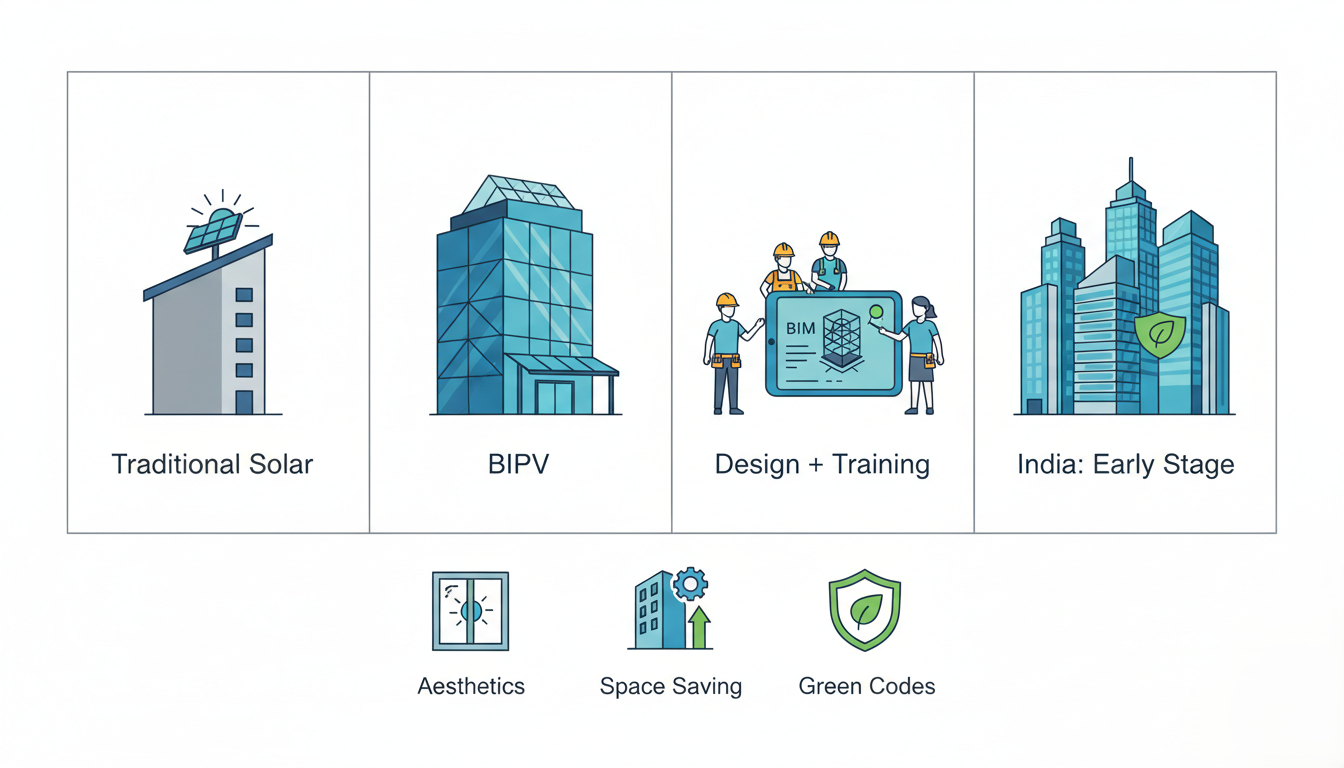
Building-Integrated Photovoltaics (BIPNormally "BIPV") is gaining real commercial traction in 2026, especially in Europe, where it is increasingly viewed as a practical building material rather than a novelty solar add‑on. The BIPV market was worth around USD 32–34 billion in 2025–2026 and is projected to grow at a CAGR of 19–22% through 2030–2035, signalling a steady move toward mainstream adoption, even though it still accounts for only about 0.5–1% of global PV capacity.
What BIPV Means
Building-Integrated Photovoltaics means the solar elements are built into the building itself — such as roofs, façades, skylights, or canopies — instead of being installed on top of a finished roof. In that model, the PV component acts as both a building material and an electricity generator.
This is what makes BIPV different from ordinary rooftop solar. It is not just about adding panels; it is about making the building envelope generate power as part of its design.
Why 2026 Matters
The BIPV market is expanding because the technology is now more mature, more visually flexible, and better understood by architects and engineers. University and industry training programmes are growing, with specialised courses in several European and Asian countries helping to build a professional ecosystem around integrated solar design.
Market analyses describe rising demand for solar‑integrated roofs and façades, as well as smart energy systems that combine BIPV with storage and grid management. Projections for 2030–2035 point to the global BIPV market growing from roughly USD 32–35 billion in 2026 toward USD 160–250 billion, underpinned by stricter building‑energy standards and urban climate targets.
Why Builders Are Interested
BIPV is attractive because it saves space, improves aesthetics, and can reduce the need for separate roofing or façade materials. That makes it especially useful in dense cities, premium commercial buildings, and projects where the design itself is a selling point.
It also fits the broader shift toward buildings that are expected to do more than provide shelter. Developers increasingly want structures that lower operating costs, meet green‑building ratings, and support urban decarbonisation goals at the same time.
What Is Driving Adoption
Three things are pushing BIPV forward in 2026:
- Better product maturity: BIPV products are now more reliable, easier to integrate with standard construction practices, and more design‑friendly than earlier generations.
- More awareness and training: Universities, certification bodies, and industry groups in Europe and beyond are expanding BIPV education, which helps normalise the technology among architects, engineers, and developers.
- Urban sustainability pressure: Cities and regulators are tightening building‑energy codes and carbon targets, making on‑site generation via façades and roofs a compelling solution.
In Europe, BIPV is moving faster because it fits well with high‑density construction, strict energy goals, and long‑standing building‑energy standards. In India, the idea is still early but increasingly discussed in the context of green buildings, urban redevelopment, and flagship programmes like PM Surya Ghar and the 2024 Draft National Building Code.
India’s Current Position
India still has limited BIPV adoption because of high upfront cost, low awareness, and weak policy support. Recent white‑paper and expert analyses note that BIPV use remains small due to high material prices, lack of clear definitions in building codes, and limited standards specifically for BIPV.
The BUILD UP and TERI–GRIHA recommendations suggest bringing BIPV into green building codes, public housing, and demonstration projects to help it scale, while also calling for training, targeted incentives, and clearer net‑metering and subsidy rules.
That means India is likely to see BIPV first in premium offices, institutional campuses, airports, and high‑visibility urban projects rather than ordinary homes. The regulatory foundation is beginning to take shape, but the market still needs more standards, financing clarity, and trained design‑and‑construction professionals.
What Still Limits BIPV
The biggest barriers are not the panels themselves, but the ecosystem around them. BIPV needs architects, structural engineers, electrical designers, contractors, and energy specialists to work together from the beginning of a project, which is still uncommon in many markets.
Costs are also higher than conventional construction plus rooftop solar: BIPV façades can cost 1.5–2 times more than conventional glass or cladding, and many installations are still custom‑designed with imported components. Until those costs fall and the building sector becomes more comfortable with integrated solar design, BIPV will keep growing — but gradually.
FAQs
Q1. What is BIPV?
BIPV is solar technology integrated into roofs, façades, skylights, or canopies so the building envelope itself generates electricity.
Q2. Why is BIPV growing in 2026?
It is gaining traction because the technology is more reliable and visually flexible, building‑energy standards are tightening, and more professionals are being trained in solar‑integrated design.
Q3. Is BIPV common in India?
No; adoption is still limited because of cost, regulatory ambiguity, and low awareness, though policy discussions and demonstration‑project interest are rising.
Q4. Which buildings suit BIPV best?
Premium offices, institutional buildings, airports, and new urban developments that combine aesthetics, sustainability targets, and higher energy loads are the strongest fit.
Q5. What is the main challenge for BIPV growth?
The main challenge is the lack of trained professionals, clear standards and codes, and a supportive regulatory and financing framework that treats BIPV as a normal building component rather than an afterthought.

